
Partnership
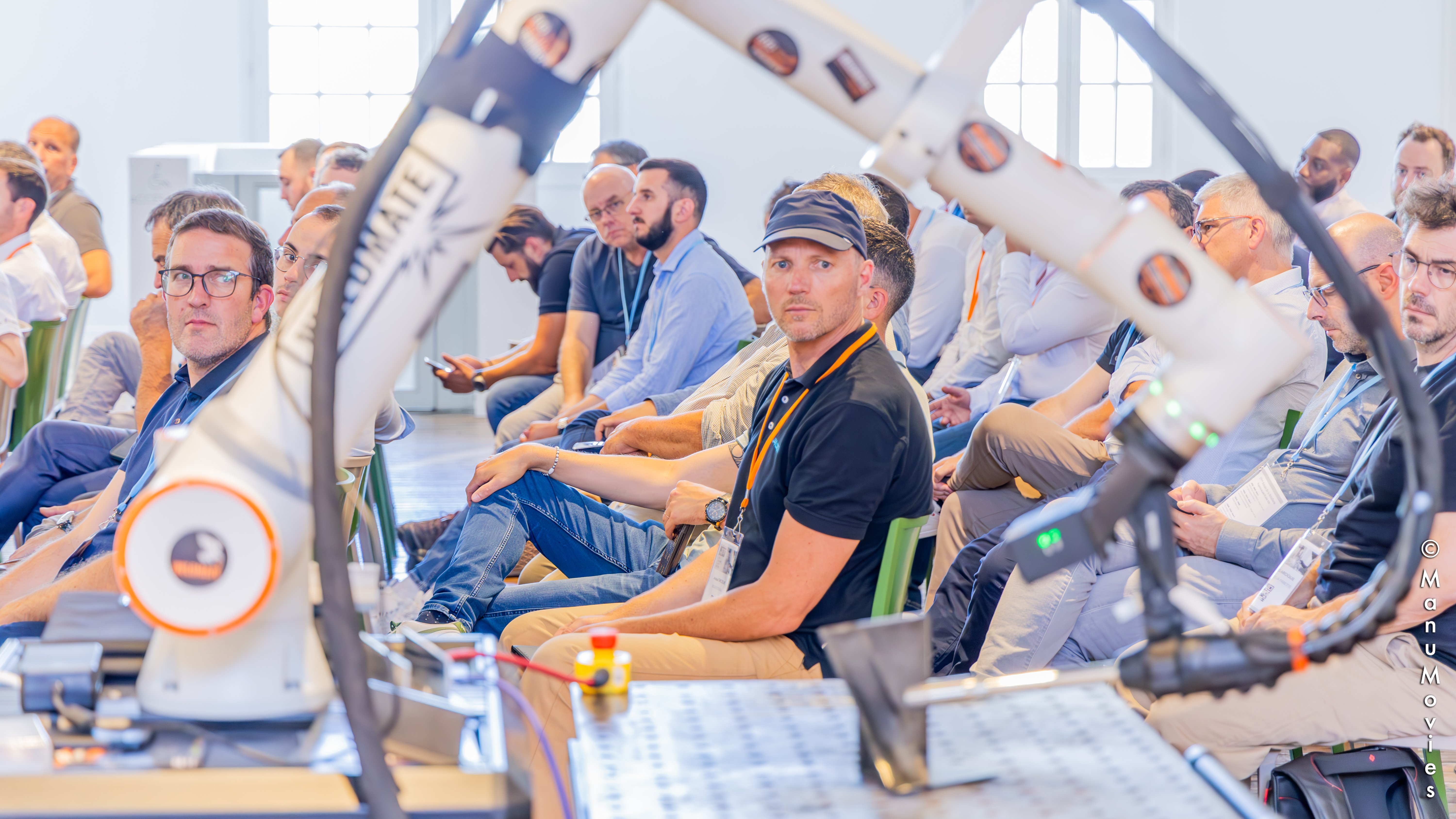

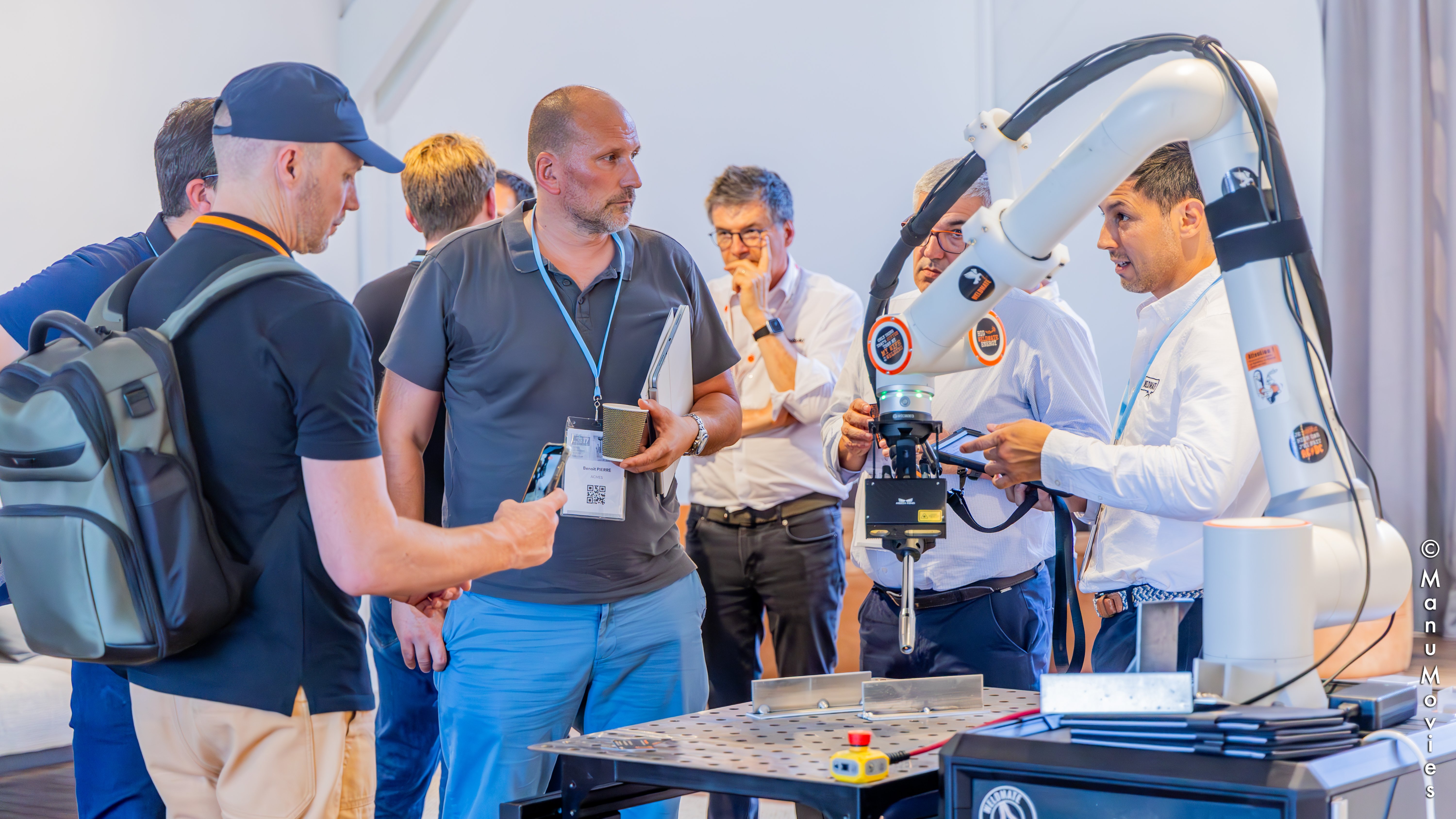
At the 17th Assises de la Métallerie, held in Saint-Denis, France, on July 9, 2026, Fuzzy Logic took part in a workshop dedicated to collaborative robotics in metalworking. The discussions highlighted a major shift for the industry: robotic automation is becoming increasingly accessible to workshops facing productivity, workforce and manufacturing challenges.
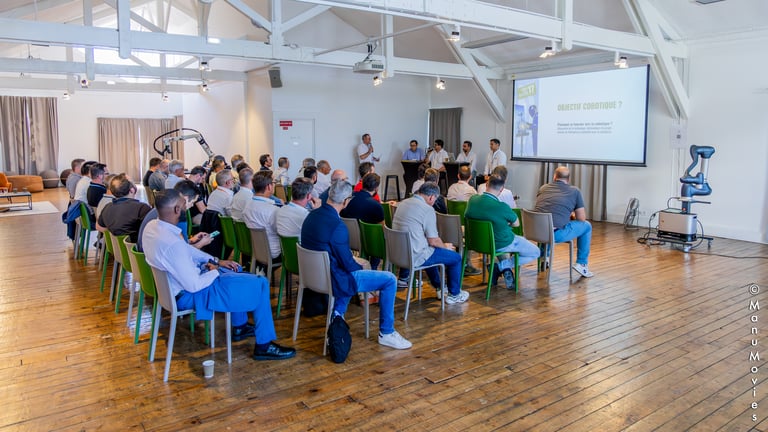
New technologies, regulations, reuse of materials, artificial intelligence, management and manufacturing methods were among the many topics addressed throughout the event.
One question is becoming particularly important: what role can robotics play in tomorrow's metalworking workshops?
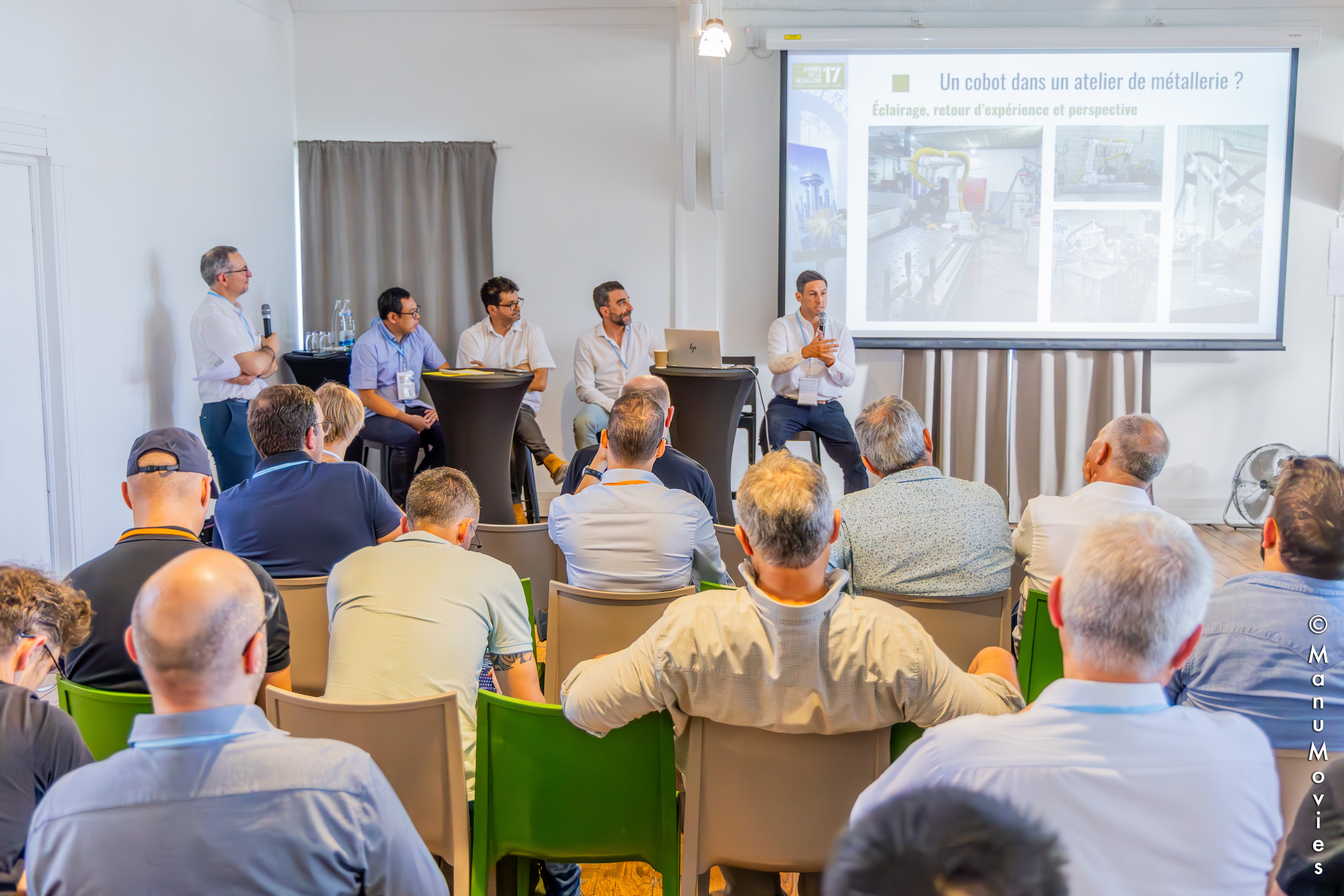
Fuzzy Logic was represented by Eduardo Jara during a workshop dedicated to collaborative robotics in metalworking, alongside Jérémy Blanche (Métal & Conseils), Salem Mezache (CM Mezache), Raphaël Calado (Inovatrance) and Yansong Liu (Ly Industries).
The objective was to confront the potential of collaborative robots with the everyday realities of metalworking companies.
Rather than focusing exclusively on theory, the session included live demonstrations of collaborative robots in operation.
It illustrated an important development: robotic automation is no longer necessarily limited to large production volumes or industrial facilities with dedicated robotics teams.
Return on investment was naturally one of the key questions raised during the workshop.
But the transformation goes much further.
Metalworking companies increasingly need automation to address several challenges simultaneously: shortages of qualified welders, repetitive and physically demanding operations, increasing production capacity and maintaining flexibility when manufacturing small and medium-sized batches.
As a result, the key innovation is not simply the robot itself.
It is also about making that robot easier to use.
For robotic automation to become genuinely accessible to SMEs, professionals need to be able to use the technology without turning every new part into a complex robotics programming or integration project.
This is precisely the approach behind WeldMate, our robotic welding solution designed to make automation more accessible to workshops.
The principle is simple: the robot should adapt to the welder's expertise — not the other way around.
Combining 3D vision with an intuitive no-code workflow, WeldMate enables welding trajectories to be prepared without conventional robot programming.
The operator retains their welding expertise while the robot handles repetitive operations.
This approach makes robotic welding particularly relevant for small and medium production runs, where traditional automation methods can often be too complex to deploy efficiently.
The discussions held during the 17th Assises de la Métallerie demonstrated that collaborative robotics is no longer purely a technology issue.
It is becoming part of a broader conversation about skills, working conditions, productivity and the future attractiveness of industrial professions.
And as robots become easier to operate, a growing number of metalworking companies can start considering automation not as a distant industrial project, but as another tool available directly on the shop floor.
Discover WeldMate and see how no-code robotic welding can fit into your workshop.
Source: Métalflash no. 170 – July-August 2026. Article reproduced with the permission of the Union des métalliers.
-1.jpg?width=2000&height=1335&name=WeldMate%20-%20Formulaire%20(1)-1.jpg)